
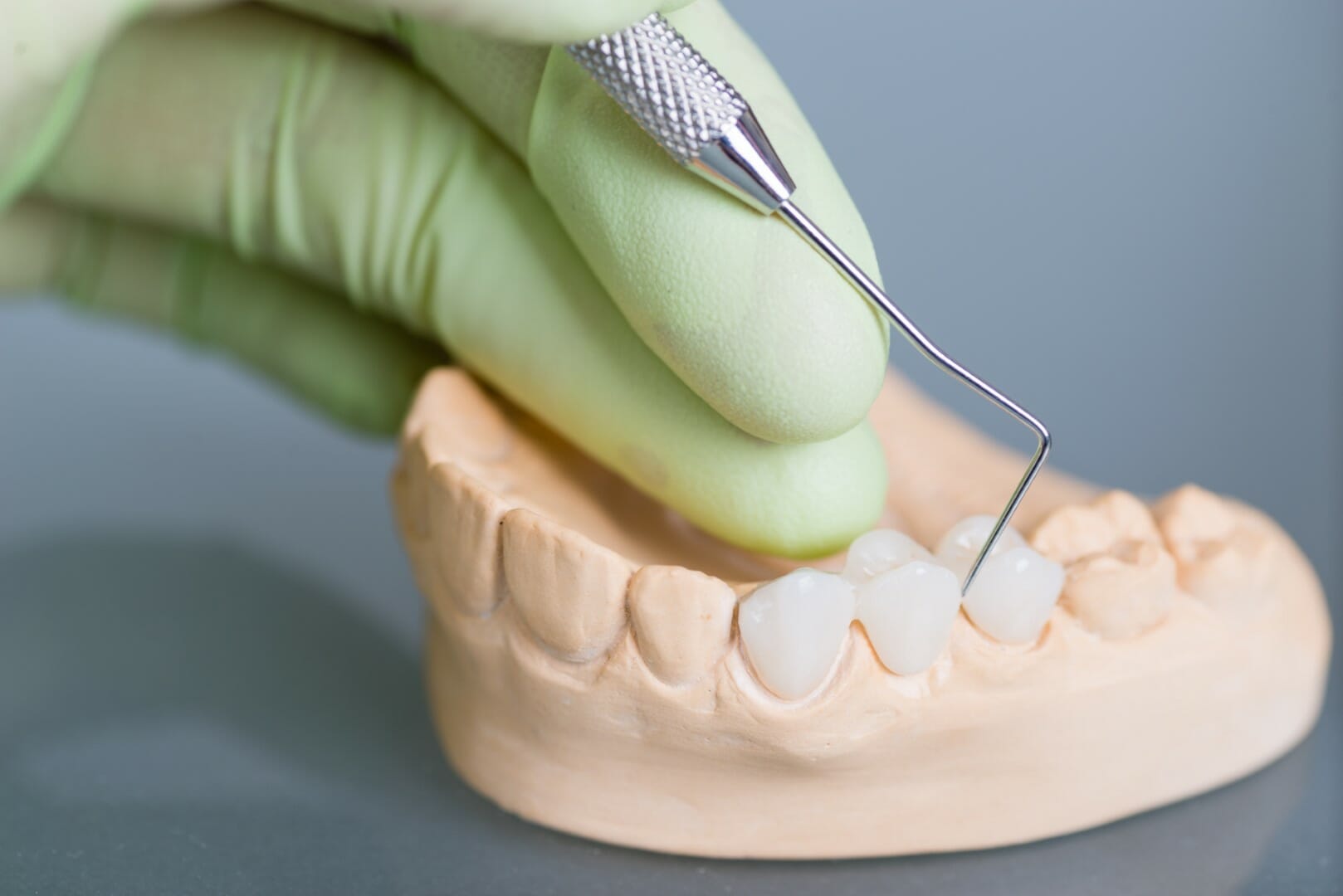
Crowns and bridges are two of the most reliable ways to restore a damaged tooth or replace a missing one. Both have been part of dentistry for decades, and modern materials make today’s restorations stronger, more natural-looking, and longer-lasting than ever before.
At Bellevue Hill Dental, our crowns and bridges are manufactured in our in-house lab using high-quality materials, with custom impressions taken to ensure a comfortable, accurate fit. We’ve been part of Sydney’s Eastern Suburbs since 1950, and we’re a preferred provider for several major health funds.
What is a dental crown?
A dental crown (sometimes called a cap) is a tooth-shaped covering placed over a damaged, weakened, or heavily restored tooth to restore its shape, strength, and appearance. The crown covers the entire visible portion of the tooth above the gumline.
Crowns are made from porcelain, ceramic, zirconia, or porcelain-fused-to-metal, depending on the location in the mouth, aesthetic requirements, and biting forces involved. Your dentist will recommend the most appropriate material at your consultation.
When is a crown needed?
- After root canal treatment — to protect the tooth from fracture under biting forces
- Heavily broken or cracked tooth — when a filling alone cannot restore sufficient structure
- Severely worn tooth — from bruxism (teeth grinding) or acid erosion
- A tooth with a very large existing filling — where the remaining tooth structure is insufficient to hold another filling
- Cosmetic improvement — where veneers or bonding are not suitable
- As part of a dental bridge — crowns are placed on adjacent teeth to anchor the false tooth
What is a dental bridge?
A dental bridge replaces one or more missing teeth using crowns on the adjacent teeth as anchors. An artificial tooth (pontic) sits in the gap, supported by the crowned teeth on either side.
Bridges are a fixed, non-removable restoration. Unlike a denture, you cannot take a bridge out. They restore biting function and prevent neighbouring teeth from drifting into the gap.
Types of dental bridge
- Traditional (three-unit) bridge: the most common type — a pontic flanked by crowns on both adjacent teeth. Suitable for most single-tooth gaps.
- Cantilever bridge: supported by a crown on only one adjacent tooth. Used when there is only one suitable anchor tooth, typically at the back of the mouth.
- Maryland (resin-bonded) bridge: a conservative option where the false tooth is supported by metal or ceramic wings bonded to the backs of adjacent teeth, with minimal preparation required. Best suited for front teeth.
- Implant-supported bridge: Instead of relying on adjacent natural teeth, the bridge is supported by implants. No healthy teeth need to be crowned. Preferred option when adjacent teeth are otherwise intact.
Crowns and bridges: cost in Sydney
The cost of a crown or bridge varies depending on the material, the complexity of the case, and how many units are involved. In general:
- Porcelain and ceramic crowns suit most situations and are the standard option for visible front teeth
- Zirconia crowns sit slightly higher and are particularly suited to back teeth that take significant biting force
- Porcelain-fused-to-metal crowns are typically the more affordable option of the three
- Bridges are quoted per unit (a three-unit bridge has three components — two crowns plus the replacement tooth)
- Maryland bridges are usually the most affordable bridge option since they involve less preparation of neighbouring teeth
Private health insurance extras typically cover part of the cost, with most major dental benefits subject to an annual limit and a 12-month waiting period. Bellevue Hill Dental is a preferred provider for several major health funds, so we can process your claim on the spot using HICAPS.
Afterpay is available at our clinic to help patients spread the cost into manageable instalments. This will be provided along with a tailored quote at your consultation.
Crown vs Implant: Which Is Right For You?
Patients sometimes ask whether they need a crown or an implant. The honest answer is that they do different things, and which is right depends on the state of the tooth.
If the tooth root is intact and the surrounding bone and gum are healthy, a crown is usually the right call. It saves your natural tooth.
If the tooth is genuinely beyond saving, the root is fractured, the bone support has been lost, or the decay extends below the gumline, then extraction followed by an implant is typically the better long-term outcome.
If a tooth has already been extracted, a bridge or implant can fill the gap. Each has its place: an implant preserves the bone and avoids crowning the neighbouring teeth, while a bridge may be a better choice when those neighbouring teeth already need crowning.
Your dentist will walk through both options with you, including the costs, benefits, and trade-offs, so you can make an informed decision based on your specific situation.
What does crown preparation involve?
Appointment 1 — preparation and temporary crown
The tooth is reduced in size under local anaesthetic to create space for the crown. A detailed impression (or digital scan) is taken and sent to the dental laboratory. A temporary crown is placed while the permanent crown is being made, which will typically take 2–3 weeks.
Appointment 2 — crown placement
The temporary crown is removed, the permanent crown is tried in for fit, shade, and bite, and then cemented or bonded into place. Total chair time for each appointment is approximately 60–90 minutes.
How long do dental crowns and bridges last?
Modern crowns and bridges are durable, long-lasting restorations. With good oral hygiene and regular dental care, many last well beyond a decade, and some considerably longer.
Zirconia crowns tend to be among the most durable options thanks to the strength of the material, while porcelain and ceramic crowns offer excellent aesthetics. Implant-supported bridges generally outlast traditional bridges because they don’t depend on the health of neighbouring teeth.
The most common reasons a crown or bridge eventually needs replacing are gum disease around the supporting teeth, decay at the edges of the crown, or fracture from heavy grinding. If you grind your teeth at night, a custom nightguard makes a real difference to how long your restorations last.
Frequently Asked Questions
When would a crown be recommended instead of a filling?
When a tooth is damaged or a filling isn’t enough to restore strength and shape, a crown can cover the tooth to protect it and improve appearance and function.
Can a crown be attached to a dental implant?
Yes. A crown can be placed on an existing tooth or attached to an implant that’s embedded in the jaw, depending on your case.
Are crowns and bridges removable?
No. They’re fixed restorations. Only a dentist can remove or replace them once fitted.
What materials are used for crowns?
Common options include ceramic, porcelain and metal (including gold and other alloys). Each is chosen to balance strength, durability and appearance for the location in your mouth.
What’s the typical lifespan for crowns and for bridges?
The page notes an average range of 7–15 years for both crowns and bridges, with the possibility of longer when they’re well-fitted and well-maintained. Individual results vary.
How do you decide between a crown and a bridge?
A crown typically restores a damaged tooth; a bridge fills the space left by one or more missing teeth to restore chewing and appearance and help keep neighbouring teeth stable.
What types of bridges are available?
The clinic describes three: traditional (most common), cantilever (used when there’s only one adjacent tooth), and Maryland (a false tooth with “wings” bonded to nearby teeth). Your dentist advises based on position and oral health.
What happens if I leave a gap from a missing tooth?
Teeth can drift into the space, potentially affecting your bite and gum health. A bridge or crown-supported solution helps keep teeth in place.
Will my crown/bridge match my other teeth?
Yes—materials and shades are selected so the restoration blends with surrounding teeth for a natural look and comfortable bite.
Are crowns or bridges ever suggested when implants aren’t suitable?
They can be considered if implants aren’t preferred or suitable due to oral or general health factors, as outlined on the page.
Beyond appearance, what benefits do crowns and bridges offer?
They help restore chewing and speaking, support a stable bite, reduce misalignment from gaps, and may help preserve facial structure.
Are crowns and bridges always the most cost-effective option?
Not always—but the page notes they may be more cost-effective than implants in some cases. Your dentist can discuss options and suitability at consultation.