
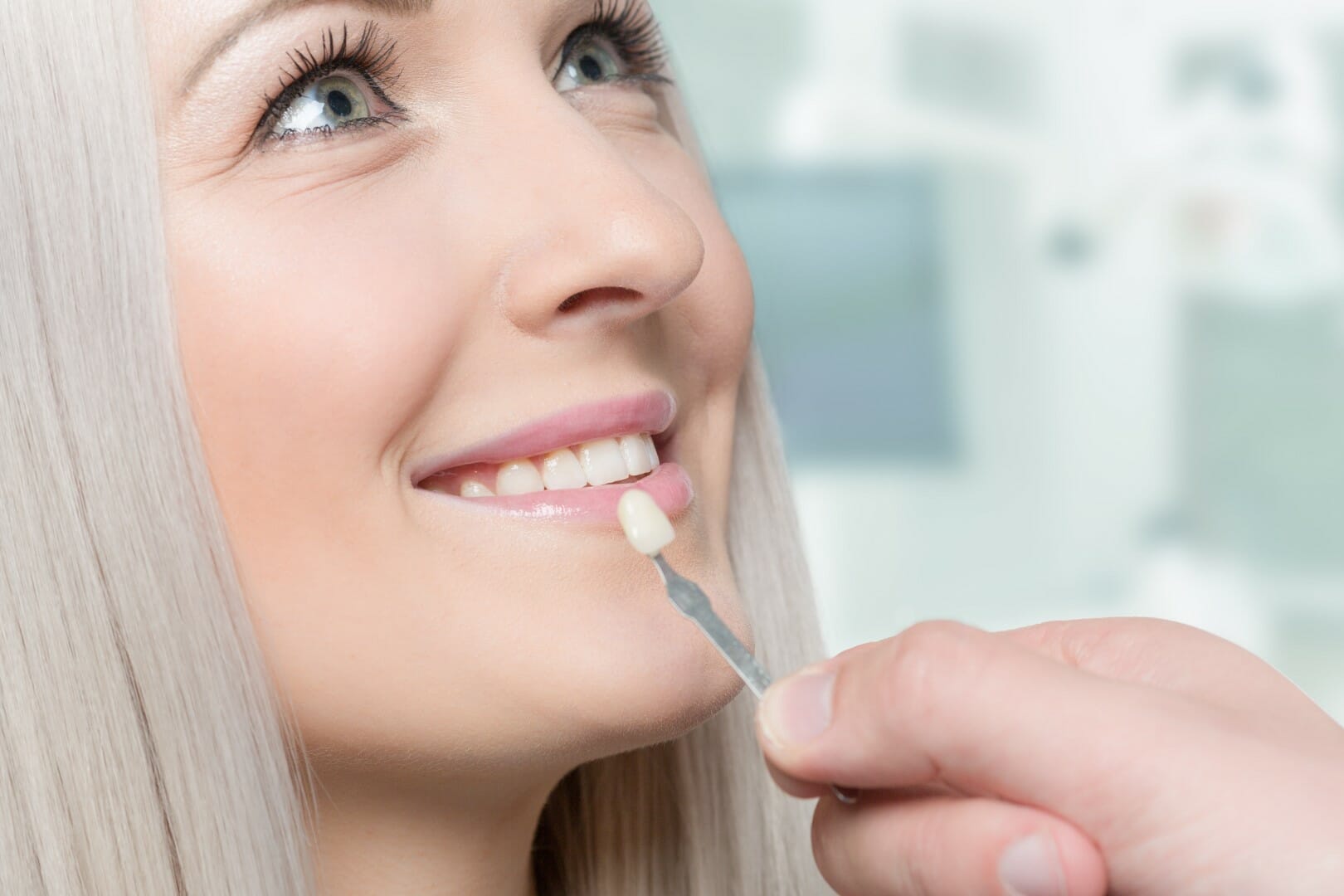
Dental veneers are one of the most transformative cosmetic treatments available, and when designed and placed by an experienced team, the result feels less like dental work and more like the smile you’ve always had, just better.
At Bellevue Hill Dental, we’ve been providing porcelain veneer treatment to patients across Sydney’s Eastern Suburbs for decades. Dr David Digges was one of the first dentists in Australia to introduce porcelain veneers, bringing extensive, long-standing experience to a treatment that has become one of the most sought-after cosmetic procedures in modern dentistry.
What are dental veneers?
A dental veneer is a thin shell, typically made from porcelain or composite resin, that is bonded to the front surface of a tooth to change its colour, shape, length, or surface texture. Veneers are custom-made to match the natural shade and translucency of surrounding teeth, or to achieve a brighter, more uniform appearance where desired.
Veneers address the front surface only and are most commonly applied to the upper front six to eight teeth that are visible when you smile.
Porcelain veneers vs composite veneers
There are two main types of veneer, and choosing between them is a balance of aesthetics, longevity, and budget.
Porcelain veneers are made in a dental laboratory and bonded to your teeth across two appointments. They are known for their excellent natural appearance, porcelain reflects light in a way that closely resembles natural tooth enamel, and they’re the more durable, longer-lasting option.
The trade-off is that they require enamel to be removed, which is irreversible, and they’re a higher upfront investment.
Composite veneers are applied directly to the teeth in a single appointment, using a tooth-coloured resin that is shaped and polished by your dentist. These types of veneers are more affordable, faster, and require minimal preparation of the tooth, meaning they are largely reversible.
While the appearance is good, they don’t have the same depth or translucency as porcelain, and they tend to need polishing or replacing sooner.
In short: porcelain is the long-term cosmetic investment; composite is the more accessible option, ideal for minor corrections or for patients who want to see how veneers might look before committing to porcelain.
What can veneers correct?
Veneers can address a wide range of cosmetic concerns, including:
- Permanent tooth discolouration that does not respond to whitening (such as staining from certain antibiotics taken in childhood)
- Chipped or worn front teeth
- Small gaps between teeth
- Mildly uneven, irregular, or asymmetric teeth
- Teeth that look too small or too short
- Worn edges from grinding or acid erosion
Veneers are not suitable for every situation, though. Teeth that are significantly damaged or weakened structurally are usually better restored with a crown. Active gum disease needs to be treated first. And severe misalignment is generally better addressed with orthodontic treatment (Invisalign or braces) before any veneer work, since that produces a more stable result and preserves more of your natural tooth.
The porcelain veneer process: Step by step
Consultation and planning
Your dentist assesses your teeth, gum health, and bite. A digital wax-up or trial smile simulation can give you a preview of the expected result before any preparation takes place. The shade and shape are agreed upon with your input.
Tooth preparation
A small amount of enamel is removed from the front surface of each tooth to create space for the veneer and ensure a flush fit at the gumline. This is performed under local anaesthetic. Impressions or a digital scan are taken and sent to the dental laboratory. Temporary veneers are placed while your permanent veneers are being made.
Veneer placement
At the second appointment, temporary veneers are removed, the permanent veneers are tried in for fit, shade, and margin integrity, and bonded to the teeth using a dental adhesive and curing light. The result is immediate.
How much do dental veneers cost in Sydney?
The cost of veneer treatment varies depending on which type you choose, how many teeth are involved, and the materials and lab work used. In general:
- Porcelain veneers are quoted per tooth and sit at the higher end, reflecting the lab fabrication and durability of the material. Most patients have between six and eight upper front teeth treated for a balanced result.
- Composite veneers are typically more affordable per tooth, though they may need refreshing or replacing more often
- Composite edge bonding is the most affordable option and works well for small refinements to one or a few teeth
Veneers are classified as a cosmetic treatment, so they are not typically covered by private health insurance. However, if you need help paying for it, Afterpay is available at Bellevue Hill Dental to help spread the cost into manageable instalments
We can help provide a tailored quote at your consultation.
How long do veneers last?
Porcelain veneers are durable, long-lasting restorations. With good oral hygiene and regular dental care, many last well over a decade, and some considerably longer. The most common reasons a veneer eventually needs replacing are fracture (usually from grinding), gum recession exposing the edge, or simply a desire to update the look over time.
Composite veneers have a shorter lifespan than porcelain and benefit from polishing every year or two to keep them looking their best. They are also more prone to chipping under heavy biting force.
If you grind your teeth at night, a custom nightguard makes a real difference to how long either type of veneer lasts.
Frequently Asked Questions
What concerns can veneers help with?
Veneers can mask chips, cracks, small gaps, discolouration (including intrinsic stains), and uneven size/shape to create a more uniform smile.
Do I need a “full set,” or can you match just one tooth?
Either is possible. Veneers can be made for a single tooth or several teeth, matched to your face and existing smile for a consistent look.
How are shade and shape decided?
There’s a design phase to finalise colour, size and shape. Work is produced locally, and patients can visit the partner lab for in-person colour/shape/size matching.
Are the veneers made in Australia?
Yes—Bellevue Hill Dental notes that products are locally made, with the option to visit the lab for precise matching.
Will veneers look natural and resist stains?
Porcelain veneers are designed to mimic natural tooth enamel and are described as durable and stain-resistant when cared for appropriately.
What habits can shorten veneer longevity?
Biting hard objects, clenching/grinding, or poor home care can increase the risk of chips or edge wear. Follow your dentist’s after-care and review plan.
I’ve had older composite bonding that’s dulled—are veneers an option?
Yes—patients sometimes consider veneers when previous bonding has lost its shine or appearance; suitability is confirmed after assessment.
How much tooth reduction is needed?
Veneers are more conservative than crowns because they cover the front surface rather than the whole tooth. Your dentist will advise the minimal preparation required for your case.
Can veneers address stains from smoking or deep internal discolouration?
They’re noted as an option for smoking-related discolouration and intrinsic stains that don’t respond to cleaning/whitening.
What’s the usual sequence from design to fitting?
Consultation → smile design (shade/shape/size) → lab fabrication → fitting and checks. Reviews help fine-tune comfort and care.
Do veneers help protect the front of a tooth?
The porcelain layer covers the surface, which can provide a protective facing; your dentist will explain benefits and limits for your situation.
How long can veneers last?
With proper after-care and maintenance, sources on the clinic site indicate veneers can last many years. Individual results vary.