A dental implant is a titanium post placed into the jawbone that acts as an artificial tooth root. Once integrated with the bone, it supports a crown, bridge, or full-arch prosthesis. Implants are the most durable and functional way to replace missing teeth, preserving jawbone density and maintaining the natural shape of your face.
Bellevue Hill Dental provides dental implant treatment for patients across Sydney’s Eastern Suburbs, replacing single missing teeth, multiple teeth, or full arches with permanent, natural-looking restorations.
What is a dental implant?
An implant has three main parts. The implant itself is a small titanium post that’s placed into your jawbone, where it gradually fuses with the surrounding bone over a few months. Once it’s stable, an abutment (a small connector) is attached, and a custom-made crown is placed on top. The crown is what you see and use, and it’s matched to your natural teeth in shape, size, and shade.
Because the implant integrates with your bone, it functions as a true replacement root. That means you can eat, talk, and smile without a second thought.
Types of dental implant treatment we offer
Single tooth implant
A single titanium post supports one porcelain or zirconia crown. This is the most common implant treatment and is used to replace any single missing tooth, including the front, back, or anywhere in between.
Multiple implants
When several adjacent teeth are missing, we can place individual implants for each position, or a smaller number of implants can support a bridge across the gap — without needing to crown the healthy teeth either side.
Full-arch implant treatment (All-on-4)
Full-arch implant treatment, sometimes known as All-on-4, replaces an entire upper or lower set of teeth using just four strategically placed implants. It’s designed for patients who’ve lost most or all of their teeth on a particular arch and want a permanent, non-removable solution. The clever angling of the rear implants often avoids the need for bone grafting, even when significant bone loss has occurred.
This treatment requires careful assessment, including a 3D scan, to evaluate your bone and plan the implant positions properly.
Implant-supported overdenture
Two to four implants placed in the jaw that clip onto a removable denture for much better stability and comfort. More affordable than full-arch implant treatment and significantly more secure than a conventional denture.
Why choose dental implants over other options?
When you have a missing tooth, there are usually three options on the table: an implant, a bridge, or a partial denture. Each suits different situations, and your dentist will walk you through them properly at your consultation. Here’s the short version of how they compare:
An implant preserves the bone underneath the gap, does not involve any work on the neighbouring teeth and tends to last considerably longer than the alternatives. The trade-offs are that it involves minor surgery, takes longer overall, and is typically a higher upfront investment.
A bridge is a fixed option that does not require surgery and can be completed in just a few weeks. It’s often the natural choice when the teeth on either side of the gap already need crowning.
Learn more about our dental bridge options.
A partial denture is a removable, more affordable option, typically suited to patients with several missing teeth or as a shorter-term solution.
For dental restorations, there’s no universally “best” choice, as it will always depend on your specific situation, the condition of your other teeth and bone, your budget, and what feels right for you long-term.
What does the dental implant process involve?
|
Stage |
What happens |
Timeframe |
|---|---|---|
|
Consultation & imaging |
CBCT scan to assess bone volume; treatment plan discussed; health fund check |
1–2 appointments |
|
Bone grafting (if needed) |
Bone augmentation if insufficient bone at implant site |
3–6 months healing before implant placement |
|
Implant placement |
Titanium post placed under local anaesthetic; healing abutment or temporary crown fitted |
60–90 minute procedure |
|
Osseointegration |
Implant fuses to bone; no treatment required during this period |
3–6 months |
|
Crown/prosthesis placement |
Impression taken; final crown, bridge, or prosthesis attached |
1–2 appointments |
|
Total timeline (uncomplicated case) |
Extraction to final crown |
6–12 months |
Dental implant cost in Sydney
The cost of dental implant treatment varies widely depending on what’s involved. As guidance:
- Single tooth implants are quoted as a complete treatment (implant, abutment, and crown)
- Full-arch implant treatment (All-on-4) is at the higher end, reflecting the multiple implants and the full-arch prosthesis involved
- Implant-supported overdentures sit between the two
- Bone grafting (if needed) and 3D scans are usually quoted as separate items
Health fund coverage for implants varies significantly between funds and policy tiers. Most basic extras policies don’t cover implants, while higher-tier policies often provide partial cover under major dental benefits, usually with a 12-month waiting period.
It’s worth checking your annual limit and waiting periods with your fund before starting treatment.
Bellevue Hill Dental is a preferred provider for several major health funds, and Afterpay is available to help spread the cost into manageable instalments. We’ll provide a tailored quote at your consultation, once your treatment plan is clear.
Am I suitable for dental implants?
Most adults in good general health are suitable for implant treatment. Key factors your dentist will assess include:
- Bone volume and density at the implant site — confirmed by CBCT scan. Insufficient bone can often be addressed with a bone graft.
- Gum health — active gum disease must be treated and stabilised before implant placement
- Medical history — conditions such as uncontrolled diabetes, bisphosphonate medication use, or previous radiation therapy to the jaw may affect suitability or require specialist referral
- Smoking — increases implant failure risk; cessation is strongly encouraged before and after surgery
- Age — implants are not placed in patients whose jaws are still growing (generally under 18)
A thorough consultation, including clinical examination and CBCT scan, is the starting point for any implant assessment.
Dental implants near Bellevue Hill — suburbs we serve
We provide dental implant assessments and treatment for patients from Bellevue Hill, Woollahra, Double Bay, Rose Bay, Paddington, Bondi Junction, Bronte, Clovelly and surrounding Eastern Suburbs.
Frequently Asked Questions
How are dental implants planned at your clinic?
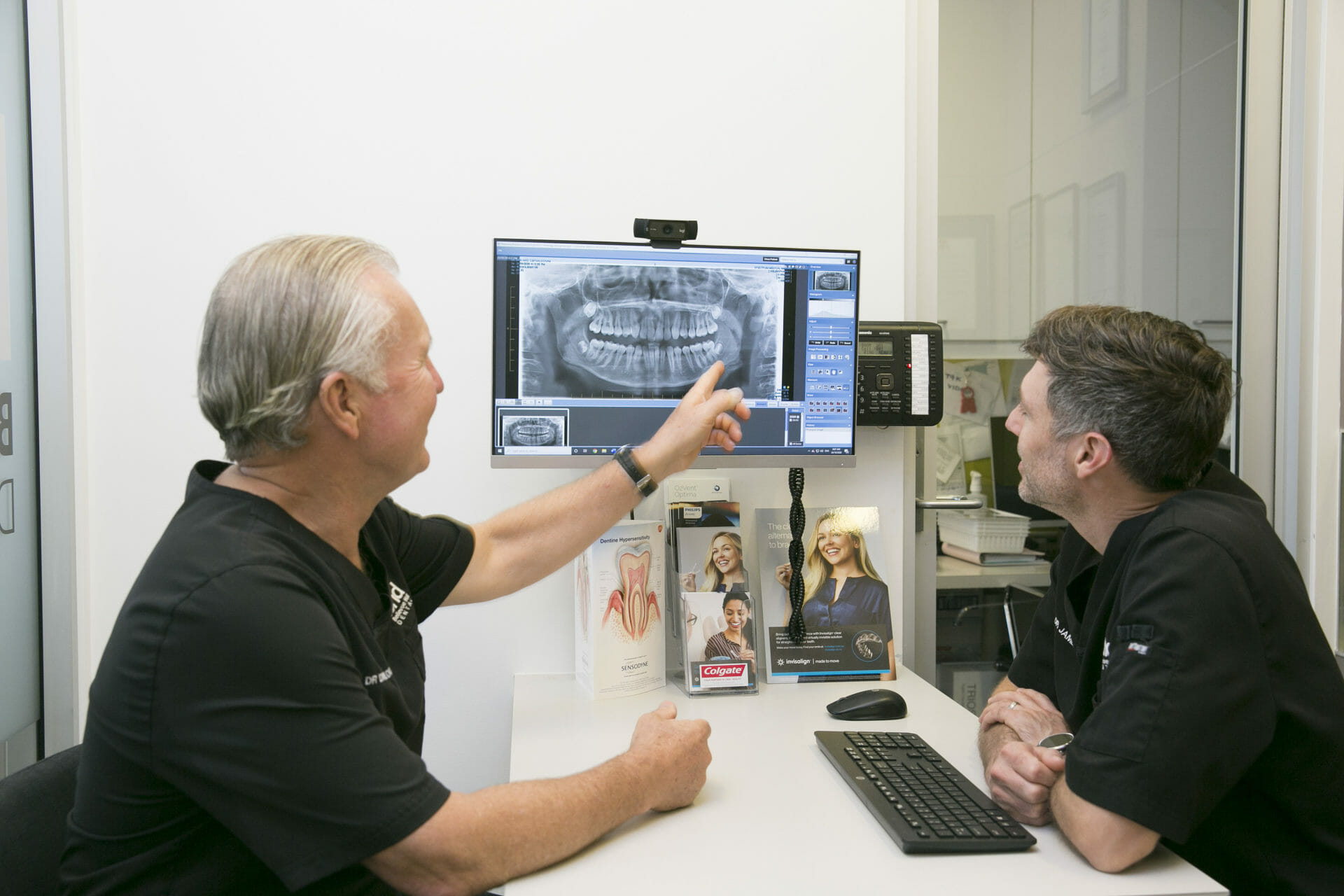
Planning starts with a comprehensive consultation: your dental/medical history is reviewed, an oral exam is done, and X-rays/digital scans are taken to assess jawbone volume and alignment before confirming next steps.
Can implants replace one tooth or several?
Both. Implants can be used to replace a single missing tooth or multiple teeth, with the aim of restoring a natural-looking, functional smile.
What factors determine if I’m a good candidate?
Bone density/quality, general health, your medical history, current medications and lifestyle habits are all considered to support long-term success.
How do you check if I have enough bone?
Your dentist evaluates bone volume and shape using X-rays and digital scans. If bone is insufficient, additional steps (such as grafting) may be recommended after assessment.
What happens during the surgery day?
The implant is placed into the jawbone under local anaesthesia (sedation can be used when appropriate). You’ll receive a personalised plan for the steps that follow.
What’s the purpose of the healing phase?
After placement, the implant needs time to fuse with the bone. This integration period typically spans about three to six months, depending on individual healing.
What will I wear while the implant heals?
Temporary teeth are provided so you can maintain appearance and day-to-day function during the healing period.
How do implants support oral health, not just appearance?
Implants help maintain facial structure by supporting the jawbone and reducing movement of neighbouring teeth that can occur after tooth loss.
What follow-up care should I expect?
Your dentist will schedule reviews to check fit and function after the final tooth is attached, and will provide home-care guidance to help protect your result.
Are there situations when implants may not be recommended?
Yes—if bone cannot support an implant or if aspects of your medical history, medications or lifestyle make healing less predictable. These factors are discussed during your consultation.