Missing teeth can affect more than just your smile. They can also influence how you eat, speak, and feel day to day. Dental implants are a well-established option for replacing missing teeth, offering both functional and aesthetic benefits.
However, not all patients are immediately suitable for implants.
In some cases, bone grafting may be recommended to support successful implant treatment. But what is it? Understanding what bone grafting is, why it may be needed, and what to expect can help you feel more confident in your decisions.
If you have been suggested to get a bone grafting first or have been considering getting implants done, learn what bone grafting is first.
What Is Bone Grafting?
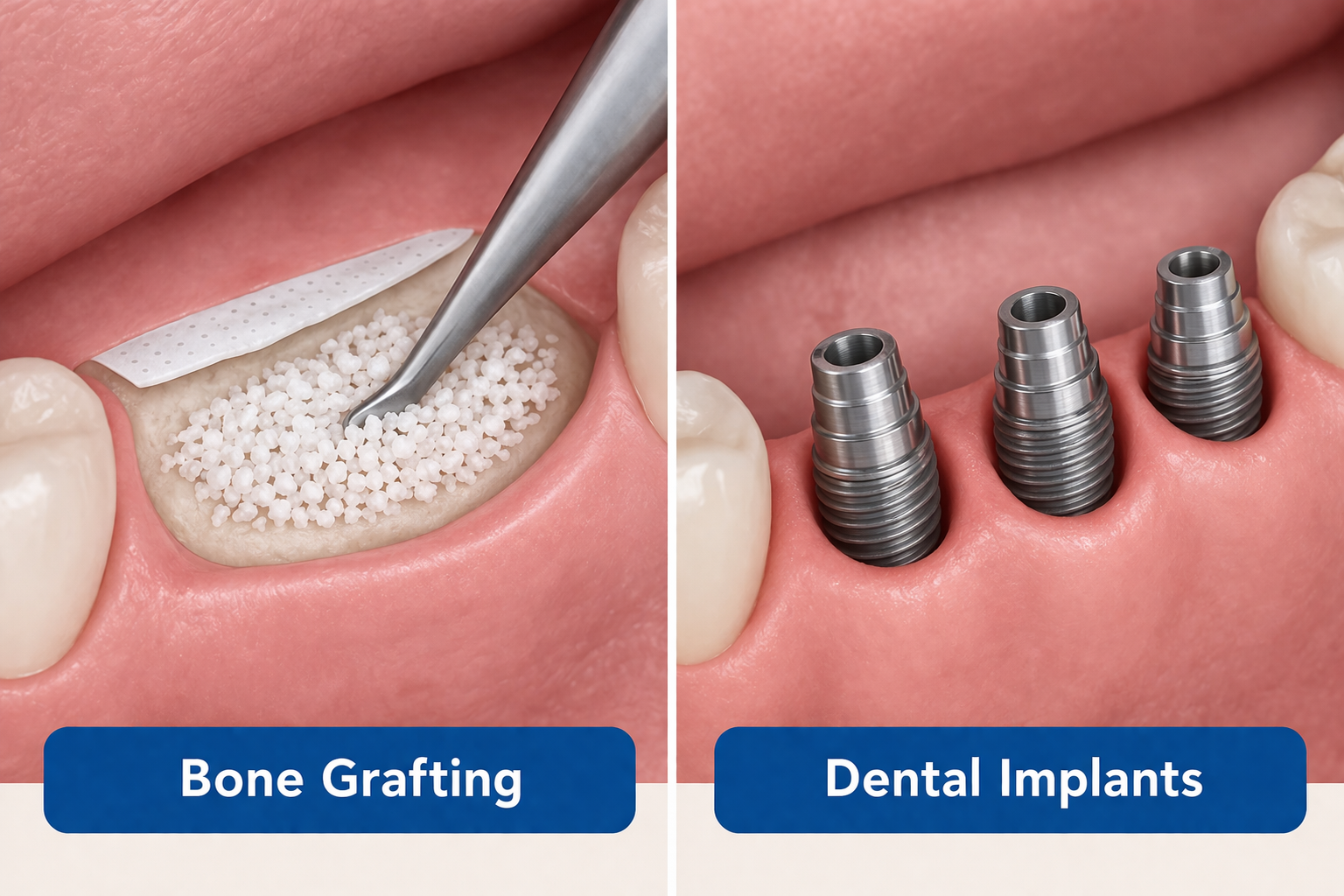
Bone grafting is a procedure used to rebuild or strengthen areas of the jawbone that have lost density or volume. This is particularly important when considering dental implants, as implants rely on sufficient bone to remain stable and function effectively.
Bone loss can occur due to:
- Tooth loss over time
- Gum disease
- Trauma or injury
- Natural ageing
In this research, it was shown that maintaining adequate bone volume is a key factor in supporting long-term implant stability. That is why dentists may have to check the structure of your jawbone first before suggesting getting dental implants.
Why Bone Grafting May Be Needed for Dental Implants
Dental implants are placed into the jawbone, where they act as artificial tooth roots. For this reason, the quality and quantity of bone are essential.
If there is insufficient bone, a bone graft for dental implants may be recommended to:
- Create a stable foundation for implant placement
- Support long-term implant success
- Restore natural facial structure
- Prevent further bone loss
A thorough dental implant suitability assessment will help determine whether bone grafting is required before treatment.
Types of Bone Grafting Procedures
There are several types of bone grafting procedures used in implant dentistry, depending on your specific needs.
Ridge Augmentation
A ridge augmentation procedure is used when the jawbone has become too narrow or thin. This technique helps rebuild the natural contour of the jaw, making it suitable for implant placement.
Sinus Lift
A sinus lift for dental implants is commonly performed in the upper jaw, particularly in the molar region. This procedure raises the sinus floor to create enough space for bone graft material and future implants.
Socket Preservation
After a tooth extraction, bone can shrink quickly. In some cases, a socket preservation bone graft may be placed immediately after extraction to preserve the area for future implant placement.
Each approach is carefully selected based on your oral health, bone structure, and treatment goals.
Bone Graft Materials
Different types of bone graft materials may be used during the procedure. These include:
- Autograft: Bone taken from another area of your own body
- Allograft: Bone sourced from a donor, processed for safety
- Synthetic materials: Biocompatible substitutes that support bone regeneration
Research shows that various graft materials have been shown to support new bone growth when used appropriately, allowing the body to gradually integrate the graft into natural bone.
Your dentist will recommend the most suitable option based on your individual case once a thorough assessment of your oral health and jawbone has been done.
What Happens During the Bone Grafting Procedure?
The bone grafting procedure for dental implants is typically performed under local anaesthesia to ensure comfort.
During the procedure:
- The area is carefully prepared
- Bone graft material is placed in the targeted site
- The area is secured and protected to support healing
In some cases, bone grafting and implant placement may be done at the same time. In others, a healing period is required before proceeding with implants.
Your dentist will guide you through the recommended timeline.
Healing and Recovery After Bone Grafting
Recovery after bone grafting surgery varies depending on the extent of the procedure and your overall health.
Typically, healing time after bone grafting can range from a few months to longer in more complex cases. This allows the graft to integrate with your natural bone and create a stable foundation for implants.
What to Expect During Recovery
Once your grafting is done, you may experience:
- Mild swelling or discomfort
- Temporary sensitivity in the treated area
- Minor dietary adjustments during early healing
Following your dentist’s aftercare instructions is essential to support proper healing. Appropriate post-operative care will allow you to improve healing outcomes and reduce complications.
Dental Implant Success Factors
Several factors contribute to the success of dental implants, including:
- Adequate bone support
- Good oral hygiene
- Overall health and lifestyle factors
- Proper treatment planning
Once bone grafting becomes a success, it will also help with implant success in patients with reduced bone volume.
Restoring Confidence with the Right Foundation
Bone grafting and dental implants work together to restore not only missing teeth but also the structure and function of your smile. By rebuilding the foundation of your jaw, these treatments can support long-term outcomes and improve quality of life.
If you’re considering dental implants, understanding the role of bone grafting can help you take the next step with confidence.
If you’d like to explore your suitability for dental implants or bone grafting, our team at Bellevue Hill Dental is here to guide you through your options.
Book a consultation for a better assessment.
Disclaimer: This content is for general information only and does not replace personalised dental advice. Please speak with a qualified dentist first for proper assessment.
Frequently Asked Questions
What is bone grafting in dentistry?
Bone grafting is a procedure used to rebuild or strengthen areas of the jawbone that have lost density. It is often recommended to support dental implant placement when there is insufficient bone.
Why is bone grafting needed for dental implants?
Dental implants require a stable and healthy jawbone to support them. If there is bone loss due to missing teeth, gum disease, or other factors, bone grafting may be recommended to create a suitable foundation.
Is bone grafting always required before dental implants?
Not all patients need bone grafting. Some may have enough natural bone for implant placement, while others may require grafting based on their individual bone structure and oral health.
How long does bone graft healing take?
Healing time can vary depending on the procedure and individual factors. In many cases, it may take several months for the graft to integrate with the natural bone before implant placement.
What types of bone grafts are used in dental procedures?
Bone grafts may include autografts (your own bone), allografts (donor bone), or synthetic materials. Your dentist will recommend the most suitable option based on your needs.
What should I expect after a bone grafting procedure?
After the procedure, you may experience mild swelling, discomfort, or sensitivity. Following your dentist’s aftercare instructions is important to support proper healing and reduce complications.
How successful are dental implants after bone grafting?
In research, adequate bone support has been identified as a key factor in dental implant success. Bone grafting can help improve outcomes by creating a stable environment for implant placement.