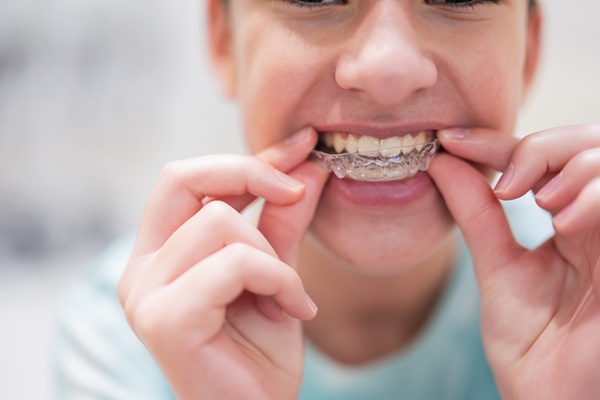
When most people think about Invisalign, they think about straightening crooked teeth or closing gaps. But there’s a question that comes up far more often than you might expect: can Invisalign actually fix bite problems, too?
The short answer is yes, for many patients, it can. But the full picture is a little more nuanced, and understanding it will help you go into your orthodontic assessment with the right expectations.
What Is a Bite Problem?
A bite problem, or malocclusion, occurs when your upper and lower teeth don’t align properly when you close your mouth. Malocclusion is not just a cosmetic concern.
A misaligned bite can affect how you chew, how you speak, and even how your jaw feels over time. When you leave this untreated, some bite issues can contribute to uneven tooth wear, jaw discomfort, and difficulty keeping teeth clean.
There are several common types of bite issues, and Invisalign bite correction is an option for many of them.
Types of Bite Issues Invisalign Can Address
Overbite
An overbite is when the upper front teeth overlap significantly over the lower front teeth. A mild to moderate overbite is one of the most common bite issues, and clear aligners may help fix overbite cases by gradually guiding the teeth into better alignment.
For more severe overbites involving jaw structure, additional treatment may be needed alongside Invisalign.
Underbite
An underbite occurs when the lower teeth sit in front of the upper teeth when biting down. Invisalign for underbite treatment works well for cases where the underbite is dental in origin, meaning it’s caused by the position of the teeth rather than the jaw itself.
Skeletal underbites that involve significant jaw misalignment may require a combined orthodontic and surgical approach.
Crossbite
A crossbite is when some upper teeth sit inside the lower teeth rather than outside. It can affect the front teeth, the back teeth, or both. Invisalign for crossbite is a well-established application of clear aligner therapy, and attachments (small tooth-coloured buttons bonded to the teeth) are often used to help the aligners apply the precise forces needed to correct the issue.
Open Bite
An open bite means there’s a gap between the upper and lower front teeth even when the mouth is closed, so the teeth don’t meet at the front. Invisalign for open bite can be highly effective, particularly when the cause is dental rather than skeletal.
An assessment with your dentist will address the underlying cause of your bite issues before recommending whether an Invisalign treatment is appropriate for you, or a different treatment approach is better.
Also read: Clear Aligners in 2025: Can They Handle Tougher Cases?
How Does Invisalign Fix a Bite?
How does Invisalign fix bite issues exactly? The process begins with a thorough orthodontic assessment, including digital impressions and bite analysis, to understand the nature and severity of your misalignment.
From there, a custom series of clear aligners is designed to move your teeth gradually and precisely into their correct positions.
At Bellevue Hill Dental, each set of aligners is worn for approximately two weeks before switching to the next in the sequence. You will wear your aligners for at least 22 hours a day to keep treatment on track, with the average treatment time ranging from 12 to 18 months, depending on complexity.
For bite correction specifically, your dentist may also use:
- Attachments — small, tooth-coloured dots bonded to certain teeth that give the aligners more grip and precision when moving teeth in specific directions
- Elastics — small rubber bands worn between upper and lower aligners to help correct the relationship between your top and bottom teeth, particularly for overbite and underbite cases
- Bite ramps — built into the aligner itself to help open the bite and allow teeth to move into the correct position
These tools significantly expand what Invisalign can achieve beyond simple tooth straightening.
Invisalign vs Braces for Bite Issues
For many bite corrections, Invisalign is a highly effective option, particularly for mild to moderate cases. However, it’s important to have an honest conversation with your dentist about whether clear aligners are the right tool for your specific situation.
When considering Invisalign vs braces for bite issues, fixed braces may be recommended for more complex bite problems, especially those involving significant jaw discrepancies or requiring very precise tooth movements in multiple directions simultaneously. In some cases, a combination approach may deliver the best outcome.
The key is an accurate orthodontic assessment for bite problems before any treatment begins. This ensures your plan is built around what will actually work for your teeth and bite, not just what’s most convenient.
What Happens After Invisalign Treatment?
Once your Invisalign treatment is complete, bite alignment and jaw function are reviewed to make sure the result is stable.
At Bellevue Hill Dental, we provide clear retainers at the end of treatment to maintain your new smile and prevent your teeth from shifting back. These are worn until your teeth have fully settled and both you and your dentist are satisfied with the outcome.
Retention is an important and often underestimated part of orthodontic treatment. It’s what protects the investment you’ve made in your smile over the long term.
Is Invisalign Right for Your Bite?
If you’ve been living with a bite issue and are wondering whether clear aligners could help, the best next step is a proper assessment. Every bite is different, and malocclusion treatment options vary depending on the type, severity, and cause of the problem.
At Bellevue Hill Dental, our team offers Invisalign in Bellevue Hill, NSW for patients across Sydney’s Eastern Suburbs. We take the time to assess your bite thoroughly, explain your options clearly, and design a treatment plan tailored to your smile goals.
If you’d like to explore whether Invisalign is the right fit for your bite, book a consultation today and let’s take a closer look together.
Frequently Asked Questions
How long does Invisalign take to correct a bite?
Treatment time depends on the complexity of your bite issue. Most patients complete Invisalign treatment within 12 to 18 months, though more complex cases may take longer.
Your dentist will give you a better estimate of your timeline that’s also personalised after your initial assessment.
Is Invisalign painful for bite correction?
Invisalign is generally more comfortable than traditional braces. Some patients experience mild pressure or discomfort when switching to a new set of aligners. This is a sign that the aligners are working and typically settles within a day or two.
Bite correction using elastics may add a small amount of additional pressure, but most patients adjust quickly.
Can Invisalign fix a severe overbite or underbite?
Invisalign may help address mild to moderate overbites and underbites. However, severe cases, like those involving jaw misalignment rather than just tooth position, may require traditional braces or a combined orthodontic and surgical approach.
Your dentist will assess the nature of your bite issue and advise on the most appropriate treatment path.
Do I need to wear elastics with Invisalign for bite correction?
Not every patient needs elastics. It depends on your specific bite issue. Elastics are commonly used for overbite and underbite correction to help guide the jaw into proper alignment.
Your dentist will include them in your treatment plan if they’re needed, and will show you exactly how to wear them.