Quick answer
TMJ disorder (temporomandibular joint disorder) can progress from mild clicking and jaw stiffness to severe pain, restricted jaw movement, and systemic symptoms, including headaches, ear pain, and throat discomfort. The key warning signs that TMJ is worsening include increased pain frequency, jaw locking, difficulty chewing, and new symptoms spreading beyond the jaw.
Catching it early, usually with a dental splint, physiotherapy, or a bite adjustment, can help give you a chance of a smooth recovery.
TMJ disorder affects the temporomandibular joint, which is the sliding hinge that connects your jawbone to your skull, just in front of each ear. It’s one of the most complex joints in the body, combining hinge and gliding movements. When it’s not functioning correctly, the effects can be far-reaching.
For many patients, TMJ symptoms come and go. The concern is when the pattern shifts, when symptoms that were occasional become frequent, when new symptoms appear, or when pain begins affecting sleep and daily function.
Understanding TMJ stages — mild, moderate, and severe
| Stage | Typical symptoms | What’s happening | Treatment focus |
|---|---|---|---|
| Mild | Occasional jaw clicking; mild morning stiffness; minor facial tension | Disc slightly displaced; muscles overworked | Awareness, posture, soft diet, warm compresses |
| Moderate | Frequent pain; regular clicking or popping; headaches; ear fullness; limited opening | Disc displacement more consistent; joint inflammation | Dental splint (nightguard); physio; anti-inflammatories |
| Severe | Jaw locking; severe pain; inability to eat normally; referred pain to neck/throat | Articular disc significantly displaced; possible bone changes | Specialist assessment; advanced splint; possible surgery |
9 signs your TMJ is getting worse
1. Pain is becoming more frequent or constant
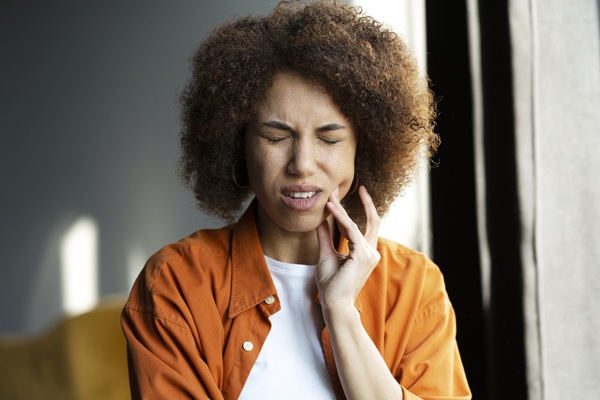
Occasional jaw discomfort is common and often resolves with rest. If pain that was intermittent is now present most days, or has shifted from a dull ache to a sharper, more persistent sensation, this indicates the joint is under increasing stress.
2. Your jaw is clicking or popping more loudly and more often
Some jaw clicking is harmless, and lots of people have it without any other issues. The concern is when the clicking gets louder, happens more often, or starts coming with pain. That usually means the small cushion inside the joint has shifted further out of place, and the bones on either side are riding over it with more force.
3. Your jaw is locking open or closed
Jaw locking is when the mouth gets stuck either open or closed for a moment, and it is a significant warning sign. It indicates the disc has moved out of position enough to physically obstruct joint movement. If you experience this, see a dentist or specialist promptly.
4. Headaches are becoming more regular
TMJ disorder is one of the leading causes of tension headaches and facial pain. The chewing muscles wrap around your temples and jaw, and when they are constantly overworked or in spasm, headaches follow.
If you’re waking up with regular headaches around your temples or behind your eyes, your jaw could well be involved.
5. You have ear pain, fullness, or ringing (tinnitus)
The jaw joint sits right in front of your ear canal, and the two share nerves and ligaments. When the joint is inflamed or not working properly, the discomfort can show up as earache, a feeling of fullness in the ear, or ringing (tinnitus). A lot of TMJ patients get checked for ear infections before anyone thinks to look at their jaw.
6. You’re developing throat pain or difficulty swallowing
This one surprises a lot of people. Some of the muscles attached to your jaw run very close to your throat, so significant TMJ trouble and muscle tension in this area can cause a tight feeling in the throat, a lump-in-throat sensation, or mild difficulty swallowing. If you’re noticing throat symptoms alongside jaw pain, it’s worth raising with your dentist.
7. Symptoms are worse in the morning
Jaw pain, stiffness, or headaches that are at their worst when you wake up, then ease through the day, are a classic sign of teeth grinding or clenching during sleep. Most people who grind have no idea they do it, and a partner usually notices first. This kind of overnight grinding wears the jaw joint down quickly and almost always needs a dental splint to manage.
8. Pain is spreading to your neck and shoulders
When the jaw is not sitting evenly, the muscles in your neck pitch in to keep your head balanced. Over time, this leads to chronic tension across the neck, tight shoulders, and more headaches. A lot of patients say physio helps their neck briefly, but the relief does not last because the jaw is the real driver.
9. Chewing is becoming difficult or painful
Struggling with hard or chewy foods, or quietly avoiding certain foods because chewing them hurts, means TMJ is starting to affect daily life in a real way. At this point, it’s worth treating actively rather than just waiting to see if it settles.
Is TMJ worse at night?
For a lot of people, yes. Night-time is when teeth grinding happens, unconscious clenching that generates up to six times more force than normal chewing. The jaw joint gets no chance to rest, and muscles that should be relaxed are working overtime instead.
Morning symptoms, like stiffness, soreness, and headache, are the clearest sign that night-time grinding is part of the picture. A dental splint worn at night repositions the jaw and takes pressure off the joint, and most patients notice their morning symptoms ease within weeks.
Things that make TMJ worse
Alongside the underlying structural issue, several habits and activities accelerate TMJ deterioration:
- Clenching teeth during concentration, stress, or exercise
- Chewing gum — repetitive loading of an already stressed joint
- Eating hard, crunchy, or chewy foods during a flare-up
- Resting your chin on your hand — shifts the jaw asymmetrically
- Poor sleep posture — sleeping on your stomach with your face to one side
- Stress and anxiety — strongly correlated with bruxism and jaw clenching
- Poorly fitting dental work — a bite that’s even slightly off can perpetuate TMJ stress
| After chiropractor or physio treatment, TMJ can sometimes feel worse temporarily Some patients find that their TMJ feels worse for a short time after neck treatment. This is usually because adjusting the neck changes how your head sits on your spine, which affects jaw position too. It generally settles, but it’s best to mention it to your practitioner. They may want to adjust their approach or recommend a dental review at the same time. |
Can TMJ disorder cause dry mouth?
Indirectly, yes. Bruxism and jaw clenching are often associated with mouth breathing during sleep, which causes dry mouth. The stress response that drives clenching also reduces saliva production. Some patients taking medications for TMJ-related anxiety or pain experience dry mouth as a side effect.
How long does TMJ pain last?
Mild TMJ flare-ups triggered by stress or diet usually settle within a few days to two weeks with simple care. This usually includes a soft diet, warm compresses, anti-inflammatories, and rest.
Untreated TMJ disorder does not tend to resolve on its own, though. It usually follows a pattern of flare-ups and partial recoveries that slowly worsen over months or years.
With proper treatment, especially with a dental splint, most people notice real improvement within 4 to 8 weeks. Full resolution, especially of headaches and referred pain, can take 3 to 6 months.
Can TMJ disorder be cured permanently?
For many patients, yes, or at least brought to a point of stable, symptom-free function. The outcome depends on the stage at which treatment begins and the underlying anatomy.
Mild to moderate TMJ disorder managed with a dental splint, physiotherapy, and stress reduction typically achieves excellent long-term outcomes. Severe structural changes to the joint may require ongoing management, and a small proportion of patients with significant joint deterioration are referred for specialist oral and maxillofacial review.
What treatment options are available for TMJ?
Dental splint (occlusal splint / nightguard)
The most common first-line treatment. A custom-fitted acrylic splint worn over the upper or lower teeth at night (and sometimes during the day) repositions the jaw, prevents tooth-on-tooth contact, and reduces loading on the joint. Most patients notice improvement within 2–4 weeks.
Physiotherapy
Manual therapy targeting the jaw muscles and cervical spine, combined with exercises to improve joint mobility and muscle balance. Particularly effective for patients with significant neck and shoulder involvement.
Anti-inflammatory medication
Anti-inflammatories like ibuprofen can settle joint inflammation during a flare-up. They’re a short-term tool, not a long-term fix.
Bite adjustment (occlusal equilibration)
If specific teeth are hitting prematurely and driving jaw strain, selective reshaping of tooth surfaces can redistribute bite forces more evenly.
Botox injections
Injections into the masseter (main chewing muscle) reduce the force of clenching. Effective for patients with significant bruxism and muscle hypertrophy. Results last approximately 4–6 months and require repeat treatment.
Frequently asked questions
How do I know if I have TMJ disorder?
The most common indicators are jaw clicking or popping, pain in front of the ear, morning jaw stiffness or headache, and limited jaw opening. A dental assessment that includes examination of your bite, jaw range of motion, and muscle tenderness can confirm the diagnosis. X-rays or a CBCT scan may be recommended to assess the joint structure.
Does TMJ get worse without treatment?
In many cases, yes. Mild TMJ may plateau or come and go, but the underlying cause, like grinding, an uneven bite, or a structural issue, does not usually resolve on its own. Without treatment, the joint can keep deteriorating, and the symptoms tend to spread.
Can TMJ cause tinnitus (ringing in the ears)?
Yes. The shared anatomy between the TMJ and the ear means joint dysfunction frequently generates referred symptoms, including tinnitus, ear fullness, and earache. These symptoms often improve significantly with TMJ treatment.
Is a night guard the same as a TMJ splint?
Similar, but not identical. An over-the-counter night guard primarily protects teeth from grinding damage. A custom dental splint is precision-fitted to reposition the jaw and decompress the joint. It does more therapeutic work than a generic guard.
For TMJ disorder, a custom splint from your dentist may be preferred. Ask your dental provider for more guidance to know the most appropriate option for you.