If you’ve lost a tooth due to gum disease, dental implants are likely on your radar. They are widely regarded as one of the most effective long-term restorative dentistry options available.
But if gum disease is what caused the problem in the first place, a very reasonable question follows: can you actually get implants with gum disease?
The answer is actually not a simple yes or no, and understanding why is important before you book a consultation.
Why Gum Health Matters for Dental Implants
Gum disease is caused by a build-up of oral bacteria biofilm (plaque) along and beneath the gum line. Over time, this bacterial activity triggers inflammation that attacks the soft tissue and, eventually, the alveolar bone, which is the bone in your jaw that supports your teeth.
This is exactly why gum disease is one of the leading causes of tooth loss in adults. And it’s also why gingival health is so fundamental to implant success.
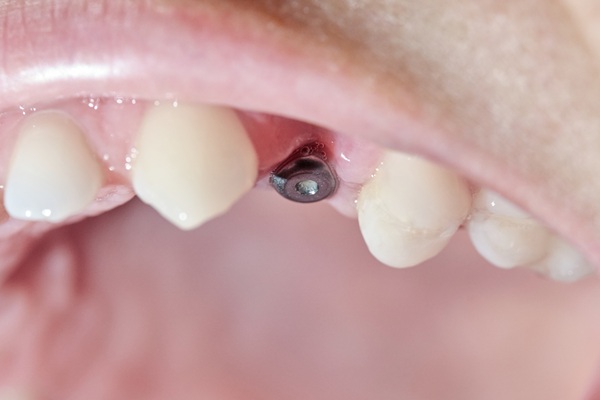
Dental implants rely on a process called osseointegration, where the titanium implant post fuses directly with the surrounding jawbone to create a stable, lasting foundation for the replacement tooth.
For osseointegration to succeed, the gum tissue and underlying bone need to be healthy and stable. Active gum disease creates an environment that works directly against this process, increasing the risk of implant osseointegration failure and a condition called peri-implantitis, essentially, gum disease around the implant itself.
Active Gum Disease and Dental Implants: What Needs to Happen First
Active, untreated gum disease is a contraindication for dental implant surgery. This is not a barrier to implants permanently, but a necessary sequence of treatment.
Before implant placement can be considered, the gum disease must be brought under control through periodontal therapy. Depending on the severity of your condition, this may involve:
- Scaling and root planing — a deep cleaning procedure that removes plaque and tartar (calculus) from below the gum line and smooths the root surfaces to discourage bacterial reattachment. It’s often the first line of treatment for moderate to advanced gum disease
- Ongoing periodontal maintenance — regular professional cleans to keep the gum environment stable once active disease has been treated
- Gum tissue regeneration — in some cases, where significant gum recession has occurred, soft tissue procedures may be recommended to restore an adequate gum environment around future implant sites
- Bone grafting for implants — chronic periodontitis often leads to alveolar bone loss around affected teeth; where the jawbone has deteriorated to the point that it can no longer support an implant, bone grafting may be required to rebuild sufficient density before implant placement can proceed
For a detailed look at how bone grafting fits into the implant process, our blog on Bone Grafting and Dental Implants: What Patients Should Know covers this in full.
Implant Candidacy Assessment: What Your Dentist Will Evaluate
Once periodontal therapy is complete and gum health is stable, a thorough implant candidacy assessment will determine whether you’re ready to proceed. At Bellevue Hill Dental, this includes a comprehensive consultation covering:
- A full oral examination and review of your dental and medical history
- X-rays and digital scans to assess remaining bone volume, density, and structure
- Evaluation of gum tissue health and the stability of surrounding teeth
- Discussion of lifestyle factors — including smoking, which significantly increases the risk of both gum disease recurrence and implant failure
- Review of any medications or systemic health conditions that may affect healing
This thorough assessment is essential, not just to confirm whether implants are technically possible, but to build a treatment plan that gives your implants the best chance of long-term success.
Also read: What Is Cosmetic Dentistry? Understanding Your Dental Aesthetic Options
The Risk of Peri-Implantitis
Even patients who receive implants after successfully treating gum disease need to be aware of peri-implantitis, an inflammatory condition affecting the gum and bone tissue around an implant, caused by bacterial accumulation at the implant site.
Patients with a history of chronic periodontitis are at a higher risk of developing peri-implantitis than those without prior gum disease. This does not mean implants are off the table. It only means diligent ongoing care and regular professional monitoring are essential to protect your investment over the long term.
The good news is that with excellent oral hygiene, regular dental check-ups, and a commitment to keeping oral bacterial biofilm under control, dental implant success rates remain high even in patients with a history of gum disease.
Tooth Extraction and Gum Disease: Timing Matters
For patients who still have teeth that need to be extracted due to gum disease before implants can be placed, timing is an important consideration. In some cases, implants can be placed relatively soon after tooth extraction has been addressed, but in others, a period of healing and gum stabilisation is needed first.
Your dentist will advise on the appropriate timeline based on the condition of your bone and surrounding gum tissue at the time of extraction. Rushing the process can compromise the outcome, which is why getting the sequencing right is what sets up a lasting result.
A Path Forward Is Often Possible
Having gum disease does not close the door on dental implants. For many patients, it simply means taking the right steps before implant placement. The key is having a dental team that takes the time to assess your situation thoroughly, treat any active disease, and plan your implant treatment in the right sequence.
At Bellevue Hill Dental, we take a comprehensive approach to implant candidacy. From your initial consultation through to placement and follow-up care, our team in Bellevue Hill is here to guide you every step of the way.
To find out whether dental implants in Bellevue Hill are right for your situation, book a consultation today and let’s take a proper look together.
Frequently Asked Questions
How long does it take to treat gum disease before getting implants?
It depends on the severity of your condition. Mild to moderate cases may be stabilised within a few months of periodontal therapy, while more advanced cases involving significant alveolar bone loss will require a longer treatment period.
Your dentist will give you a clear timeline after a thorough assessment.
Can gum disease come back after I get implants?
Yes, patients with a history of gum disease remain at elevated risk of peri-implantitis and gum disease recurrence. Diligent oral hygiene and regular professional maintenance are essential to protect your implants long-term.
Will I need bone grafting if I’ve had gum disease?
Not necessarily. It depends on how much bone loss has occurred. Where the remaining bone volume is insufficient to support an implant, grafting will be recommended.
This is assessed through X-rays and digital scans at your consultation.
Are implant-supported dentures an option if I’ve had widespread gum disease?
Yes, implant-supported dentures can be a suitable option, provided the remaining bone is sufficient (or can be augmented through grafting) to support the implant posts.
This is discussed as part of your implant candidacy assessment at Bellevue Hill Dental.